

Why Martial Arts Is the Key to Sharper Focus for Garden City Youth
Better focus is not just a school goal, it is a trainable skill we build one class at a time.
If you are raising a child in Garden City, you have probably noticed how hard it can be to stay locked in right now. Between heavy homework loads, packed schedules, and constant screen time, attention gets pulled in a dozen directions. We hear it from families all the time: your child is bright, capable, and motivated, but focus slips the moment tasks feel boring, frustrating, or overwhelming.
That is exactly why we take martial arts training seriously as a tool for the mind, not just the body. When youth train consistently, the practice of paying attention, following sequences, and managing impulses becomes part of everyday life. And in a community like ours, where school performance and emotional resilience matter, those skills add up fast.
In this guide, we will break down how martial arts strengthens focus in practical, science-backed ways, what you can expect over the first 8 weeks, and how our youth training structure in Garden City supports attention, self-control, and calmer decision-making.
Why focus is harder for kids right now in Garden City
Garden City is full of high-achieving students and involved families, which is something we love about our community. But that also means kids feel pressure earlier than many adults remember. Long days at school, tutoring, sports, and activities can create a background level of stress that quietly drains attention. When the brain is overloaded, focus does not fail because kids do not care, it fails because the system is maxed out.
Add screen habits into the mix and you get a tricky pattern: quick hits of entertainment train the brain to expect constant novelty. Then, when your child sits down for reading, studying, or even listening to instructions, the mind starts hunting for stimulation. That is not a character flaw. It is training, just not the kind you want.
The good news is that attention works the same way strength does. The brain adapts to what you ask it to do, repeatedly, in a structured environment. That is where martial arts becomes so useful: it is engaging, demanding, and built around clear feedback.
The science link between martial arts and sharper attention
Focus is not one ability. It is a set of mental skills that include attention control, working memory, and inhibitory control (the ability to pause before acting). Researchers often group these skills under executive function, and study after study shows that martial arts training can improve them in youth.
A major reason is neuroplasticity, your child’s brain literally rewires with practice. Training also supports brain chemistry tied to learning, including increases in brain-derived neurotrophic factor (BDNF), which plays a role in memory and cognitive performance. In youth programs, improvements have been observed in as little as 8 weeks, especially in ages roughly 6 to 12, with measurable gains in attention and self-control.
There is also a more modern framework emerging in 2024 to 2025 research, sometimes described through an Integrative Theory of Martial Arts. The idea is simple and powerful: martial arts blends sensorimotor demands (balance, timing, coordination) with cognitive demands (decision-making, inhibition) and social-emotional demands (respect, composure). When those demands are trained together, the brain is pushed toward more resilient, efficient states for learning and regulation.
We do not need a lab to see the practical version of this. When a student learns to keep their eyes up, breathe, and respond to a cue instead of rushing, that is executive function training in real life.
What makes martial arts different from “just exercise” for focus
Any movement can help mood and general health, and we are all for kids being active. But martial arts stands out because it requires thinking while moving, not thinking after moving. Your child is not simply running laps. Your child is tracking instructions, remembering combinations, and adjusting to timing.
In class, students constantly practice:
- Listening for a cue and responding quickly
- Holding a sequence in mind while moving
- Controlling intensity so the technique stays safe and clean
- Resetting after a mistake without melting down
- Staying aware of space, partners, and boundaries
That blend is one reason martial arts often shows stronger gains in executive function than traditional exercise alone. The brain is learning to manage itself under mild pressure, then recover and try again. That is a life skill, not just a workout.
How our classes build focus on purpose, not by accident
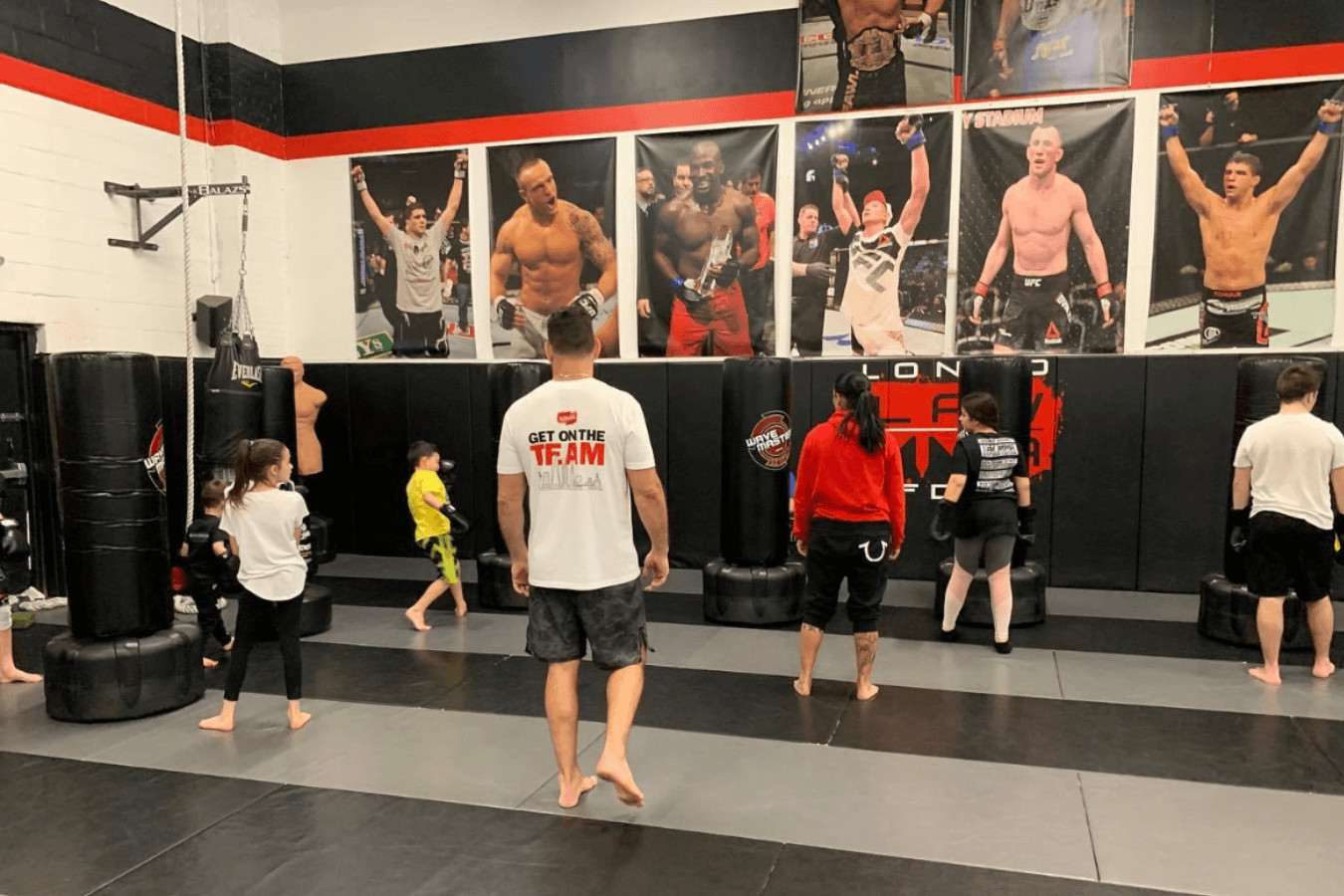
We do not hope focus improves. We design for it. Our youth classes use structure and repetition, but not the boring kind. Kids rotate through drills that demand attention in short bursts, which matches how youth brains learn best. They get immediate feedback, a clear standard to aim for, and a chance to try again right away.
The three focus skills we train every week
Attention control
Students practice keeping eyes and mind on the task, even when distractions happen. That can mean staying engaged through a longer drill, or snapping back to the instructor’s voice quickly when instructions change.
Working memory
Combinations and step-by-step techniques train kids to hold information briefly, then execute it. Over time, that skill shows up outside the mat when your child follows multi-step directions at home or tracks a longer assignment at school.
Inhibitory control
This is the big one for many families. Controlled training teaches students to pause, choose, and regulate force. Even simple rules, like waiting for the signal before moving, build the brain’s braking system.
A realistic 8-week timeline for focus gains
Families often ask how long it takes before they notice changes. While every child is different, research commonly points to meaningful improvements in attention and executive function after about 8 weeks of consistent training. In our experience, that is a fair window to look for early signs, especially if your child trains 2 to 3 times per week.
Here is what that timeline often looks like in the real world:
1. Weeks 1 to 2: Your child learns routines, expectations, and how to stay engaged through a full class without zoning out.
2. Weeks 3 to 4: Techniques start to stick, and you may notice better listening and quicker responses to directions.
3. Weeks 5 to 6: Self-control improves in small moments, like resetting after a mistake or staying patient during partner drills.
4. Weeks 7 to 8: Focus carries over more clearly into homework, chores, and calmer reactions when something feels challenging.
This is also where consistency matters. Martial arts is not a one-time hack. It is more like building a mental muscle, and repetition is the work.
Martial arts and youth stress: focus improves when nerves settle down
A child who is anxious, overwhelmed, or easily frustrated is not choosing to lose focus. The nervous system is simply stuck on high alert. One of the underrated benefits of martial arts training is that it gives kids a safe place to practice intensity with control, then come back down.
Breathing, posture, and mindfulness-like attention to the present moment are built into quality training. Students learn what it feels like to be keyed up, then learn how to steady themselves. Over time, that supports emotional regulation, and emotional regulation supports focus. When your child is calmer, attention becomes available again.
We also see social confidence play a role. When kids feel competent and connected, they tend to participate more, ask questions sooner, and persist longer. That persistence is focus in action.
What you can do at home to support what we build in class
Martial arts classes in Garden City work best when the environment outside the mat supports the habits we are teaching. You do not need to turn your home into a boot camp. Small choices make a difference.
Try these simple supports:
- Protect sleep as much as you can, because attention is fragile when kids are tired
- Give one instruction at a time, then gradually build to two or three steps
- Create a short “reset” routine before homework, like water, a breath, and a clear start time
- Ask your child to teach you one technique detail from class, which strengthens memory and confidence
- Track progress weekly, not daily, because focus changes are often subtle at first
If you want a practical idea, we often suggest picking one measurable focus goal for 8 weeks, like completing homework with fewer reminders, or sitting through a full reading session without getting up repeatedly. The goal is not perfection. It is trend lines.
Quick comparison: why this training supports school focus so well
This is not about labeling one activity as “good” and another as “bad.” It is about matching the tool to the goal. If your goal is sharper attention and better self-management, martial arts fits naturally.
Safety, beginners, and kids who struggle with attention
Another common question is whether martial arts is safe and appropriate for beginners, especially kids who are impulsive, anxious, or have attention challenges. Our answer is yes, when training is structured and progressive.
We keep classes controlled, with clear rules, age-appropriate drills, and coaching that emphasizes technique over chaos. Students learn boundaries early, including how to work with partners respectfully and how to regulate intensity. For many kids who struggle elsewhere, the clarity is actually calming. They know what is expected, and they get consistent feedback.
If your child has ADHD or similar challenges, martial arts can be a strong non-pharmacological support alongside any plan you already have. We stay focused on safe training, steady routines, and coaching that helps your child succeed without being singled out.
Martial arts in Garden City: building focus that carries into daily life
In a place like Garden City, youth schedules are busy, expectations are high, and the pace can feel nonstop. That is why we view training as more than an extracurricular. It is a weekly practice in attention, patience, and problem-solving, the exact skills kids need when school gets demanding or emotions run hot.
As students gain skill, something interesting happens: focus becomes part of how they move through the day. They stop rushing everything. They listen with more intention. They recover from frustration faster. And while grades are not the only measure of success, many families notice schoolwork becomes less of a nightly battle.
That is the deeper value of martial arts. You are not just enrolling your child in a class. You are giving your child a system for building self-directed focus, one repetition at a time.
Take the Next Step
If you want a practical, science-aligned way to help your child concentrate, regulate emotions, and follow through under pressure, our youth programs are built for exactly that. We use martial arts training to develop attention and executive function in a way kids can actually enjoy, which matters more than people think.
When you are ready, we would love to show you what training looks like at Ray Longo's Mixed Martial Arts and help you choose a class time that fits your family’s routine in Garden City.
See what sets Ray Longo’s Mixed Martial Arts apart by joining a martial arts class today.