

How Brazilian Jiu Jitsu Builds Real-World Skills for Garden City Teens
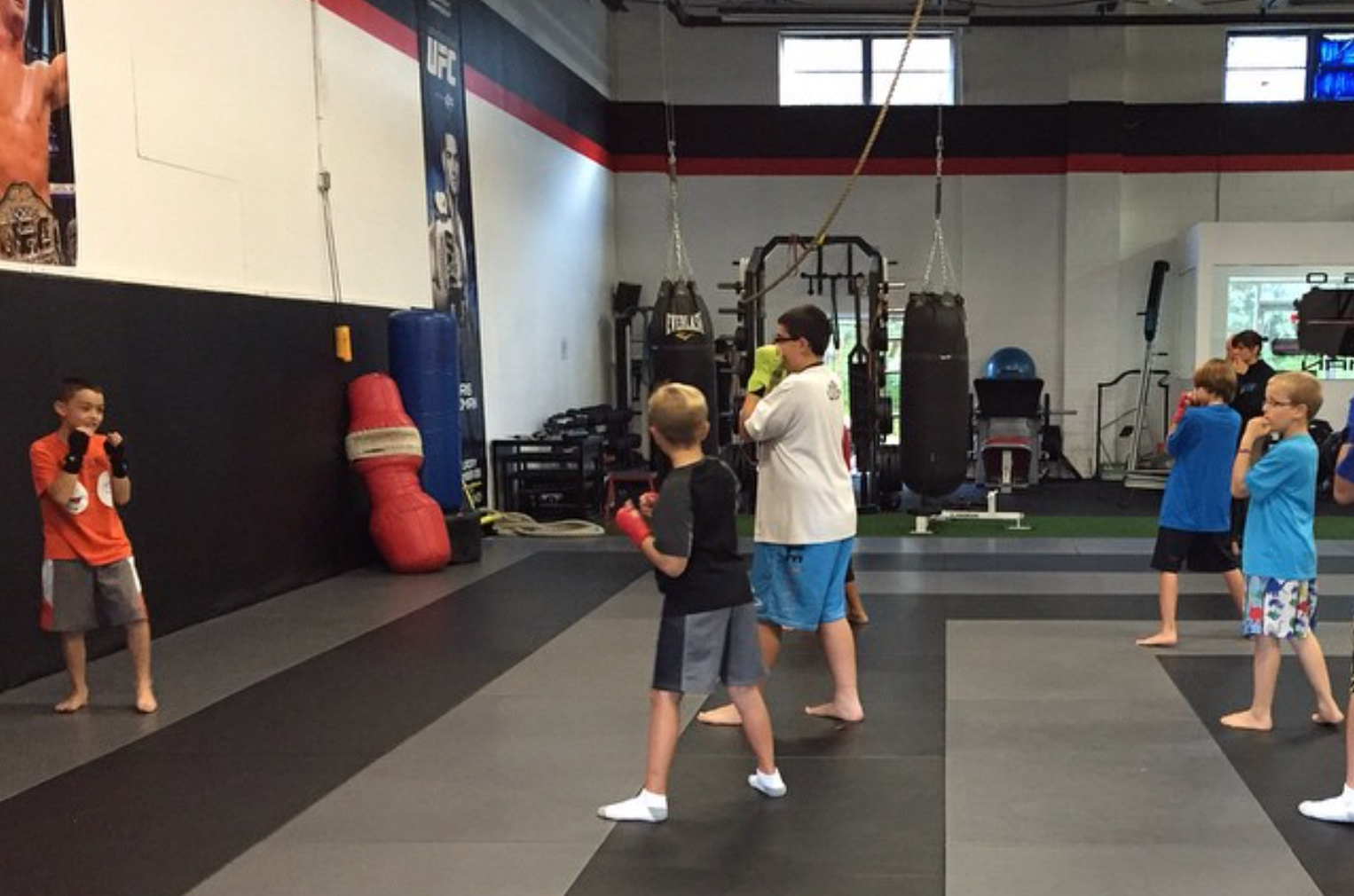
Brazilian Jiu Jitsu gives teens a practical way to build confidence, composure, and capability that shows up in everyday life.
Teen years in Garden City can feel busy in a very specific way: school expectations, sports, social pressure, and the constant pull of screens all stacked on top of each other. In the middle of that, Brazilian Jiu Jitsu offers something rare: a structured challenge where you can measure progress, learn real self-defense, and feel your confidence grow week by week.
We see it happen in our teen program all the time. A student shows up a little unsure, learns how to move safely and think clearly under pressure, and starts carrying themselves differently. Brazilian Jiu Jitsu is not about being the loudest person in the room. It is about becoming harder to rattle, more disciplined, and more capable, even when things get uncomfortable.
If you are a parent, you are probably looking for something that builds your teen up without adding more chaos to the schedule. If you are a teen reading this, you may just want something that feels real, where effort matters and progress is earned. Our job is to make that path clear, safe, and worth your time.
Why Brazilian Jiu Jitsu clicks for teens in Garden City
Brazilian Jiu Jitsu is a grappling art built around leverage, positioning, and control. That matters for teens because it rewards problem-solving more than raw strength. You learn to slow down, choose better options, and stay calm long enough to execute them, which is a skill that carries into school, friendships, and stressful moments.
Unlike activities where improvement can feel vague, BJJ gives you constant feedback. If you try to rush, you get off balance. If you forget posture, you get controlled. If you keep showing up, you improve. That cause-and-effect loop is simple, but it is powerful for ages 14 to 18 when identity, confidence, and decision-making are still under construction.
Garden City teens also benefit from the structure. When you train 3 to 5 times per week, you are building consistency and habits, not just techniques. That routine becomes a kind of anchor, especially during semesters packed with tests, sports seasons, and everything else that piles up.
Confidence that is earned, not performed
There is a big difference between looking confident and being confident. Brazilian Jiu Jitsu builds the second kind because it asks you to work through real resistance in a controlled environment. You do not “pretend” your way through a tough round. You learn what you can handle, where you need to improve, and how to keep going anyway.
We coach teens to treat training like a lab. You experiment, you make mistakes, you adjust, and you try again. Over time, that creates a quiet self-assurance. It shows up in small ways first: better posture walking in, speaking up more easily, handling criticism without shutting down. Then it starts to show up in bigger ways: taking on harder goals, dealing with pressure at school, and staying more level-headed when emotions run hot.
This matters for bullying dynamics too. Predators and pushy peers often look for easy reactions. A teen who knows how to stay calm, set boundaries, and carry themselves with confidence is a different target entirely.
Real self-defense for real situations, without the drama
Self-defense for teens should be practical, age-appropriate, and focused on safety. Brazilian Jiu Jitsu fits that well because it teaches control: how to manage distance, how to clinch safely when needed, how to escape holds, and how to get back to your feet. For teens, those are realistic goals.
We also emphasize situational awareness and smart decision-making. The best self-defense is avoiding the problem. When you cannot avoid it, you want reliable skills that work under stress, not techniques that only work when everything goes perfectly.
Our training stays controlled. You learn fundamentals first, then pressure-test them gradually. That progression is a big reason parents feel comfortable once they watch a class: the room has intensity, but it is guided, and safety is always part of the lesson.
Discipline and focus that spill over into school
One of the most underrated benefits of Brazilian Jiu Jitsu is how it trains attention. When you drill a technique, you have to track details: grips, hip angle, foot position, timing. If your mind wanders, the technique falls apart. That is not a punishment, it is feedback.
Over time, teens build better focus because they practice focusing. It sounds almost too simple, but it works. We also see time management improve because training forces you to plan: homework, practices, family obligations, then class. When a teen commits to training 3 to 5 days per week, the schedule gets real fast, and so does the need for priorities.
That kind of structure helps with academic stress too. Training gives you a reset button. You walk in carrying the day, you work hard, you leave lighter and clearer. That physical effort and endorphin release is not a magic cure for anxiety, but it is a healthy outlet that many teens genuinely need right now.
Resilience and emotional control under pressure
Teen life comes with pressure, and not all of it is visible. Social media, expectations, comparison, and the fear of messing up can create a constant background noise. Brazilian Jiu Jitsu trains you to operate while uncomfortable, which is basically a life skill.
When you are stuck under pressure in a safe training round, you learn to breathe, frame, escape, and keep thinking. That becomes a pattern. Instead of panicking, you problem-solve. Instead of quitting, you reset and try again. We do not just teach techniques, we coach the mindset: stay present, take the next best step, and learn from the round.
A lot of teens also benefit from the simple experience of being challenged and supported at the same time. You work hard, you get corrected, you improve, and you earn respect through effort. That combination builds resilience in a way that feels real, not motivational.
Fitness that supports sports, posture, and everyday energy
Brazilian Jiu Jitsu develops a kind of athleticism that transfers well. It builds strength, coordination, balance, flexibility, grip endurance, and cardio, but not in a “do 100 reps and hope for the best” way. You gain fitness while learning skills, which keeps teens engaged longer than workouts that feel repetitive.
For Garden City teens who already play sports, BJJ helps with body awareness and movement control. You learn how to base, pivot, and generate power with your hips. You also learn how to protect joints and move intelligently, which can support injury prevention when combined with good recovery habits.
For teens who are not in sports, BJJ is still a strong fitness foundation. You will sweat, you will move in every direction, and you will build usable strength. It is the kind you notice when you carry backpacks, climb stairs, or just feel less sluggish during long school days.
Social skills and community, without forced small talk
Teen social life can be complicated. Training gives you a shared goal and a structured way to connect. You partner up, you drill, you learn each other’s pace, and you start to build trust. It is social, but it is not awkward.
We also teach good training etiquette: respect your partners, control your intensity, and communicate. Those habits translate into better conflict management outside the gym. Teens learn to handle friction without escalating, and to advocate for themselves clearly, like saying, “Let’s slow it down,” or “Can we reset that rep?”
Over time, the room becomes a positive community. You see familiar faces, you get encouragement, and you get a sense of belonging that is earned through effort. For a lot of teens, that is a bigger deal than it sounds.
What your teen learns first, and why fundamentals matter
In Brazilian Jiu Jitsu, flashy moves are fun, but fundamentals win. We build teens up with core positions and concepts, then layer on complexity. That keeps training safer and makes skills more reliable in real life.
Here are a few foundational areas we focus on early:
• Breakfalls and safe movement so your teen learns how to protect the body during takedowns and scrambles
• Escapes from bad positions like mount or side control, because getting safe again is a priority
• Guard basics that teach distance management, frames, and how to stay composed under pressure
• Positional control concepts like posture and base that make techniques work against resistance
• Simple submissions taught with control and responsibility, emphasizing safety and tap awareness
When teens learn these fundamentals, the sport starts to make sense. They stop feeling lost, and the confidence jump is noticeable.
How often should a Garden City teen train to see real results?
Consistency matters more than perfection. For most teens, we recommend training 3 to 5 times per week if the schedule allows. That frequency builds momentum without rushing development.
If your teen is brand new, starting with a manageable routine is smarter than going all-in for two weeks and burning out. We would rather see steady progress across months than short bursts. Belt progression naturally supports that long view: show up, learn, improve, repeat. It is simple, but it teaches patience and work ethic.
Recovery counts too. Sleep, hydration, and reasonable nutrition make a big difference in how a teen feels on the mat and at school the next day. We remind students that training hard is great, but training intelligently is the goal.
Where BJJ and MMA fit together for well-rounded skills
Some teens start with Brazilian Jiu Jitsu and later get curious about broader martial arts training. That is a natural progression. Grappling builds composure and control, and for self-defense it pairs well with learning distance, movement, and awareness in a more complete way.
We also coach with real-world application in mind. That means you are not just collecting techniques, you are learning when and why to use them. For families looking ahead, that pathway can extend into programs like Adult MMA in Garden City once a student is mature enough and ready for the commitment. The key is building the foundation first, and BJJ is a strong foundation.
If you are searching for Martial Arts classes in Garden City that deliver practical benefits, the biggest thing to look for is a structured progression and a culture that keeps training safe and consistent. That is what allows teens to grow, not just physically, but personally.
Take the Next Step
Building real-world skills takes more than motivation, it takes a place where training is consistent, coached, and built around fundamentals under pressure. That is exactly how we run our teen Brazilian Jiu Jitsu program at Ray Longo's Mixed Martial Arts, and it is why so many Garden City families use training as a steady outlet during the busiest years of high school.
If you want your teen to gain confidence, resilience, and practical self-defense while getting in great shape, we would love to help you map out a realistic plan using the class schedule and the right starting pace at Ray Longo's Mixed Martial Arts.
Move from reading to training and join a martial arts class at Ray Longo’s Mixed Martial Arts today.