

Unlocking Discipline: How Mixed Martial Arts Shapes Lifelong Habits

Discipline is not something you’re born with, it’s something you practice, and training gives you a place to practice it on purpose.
Mixed Martial Arts gets talked about like it’s only about fighting, but the people who train consistently know the truth: the biggest win is how it changes your week. When you show up to class, follow a plan, and stay accountable to your teammates, discipline stops being a motivational quote and starts becoming a habit. That matters for kids who need structure, adults who want a reliable outlet, and anyone who’s tired of starting over every Monday.
We see it every day here in Garden City. Students walk in for fitness, self defense, or a new challenge, and over time what they really build is follow through. Training on a schedule changes how you eat, how you sleep, how you handle stress, and how you talk to yourself when something feels hard. That’s what this article is about: how Mixed Martial Arts shapes lifelong habits, and how we coach that process in a way you can actually sustain.
Why Mixed Martial Arts is growing and why discipline is the real product
Mixed Martial Arts is one of the fastest growing parts of the martial arts industry, and that growth is not just about big events on TV. In the U.S., the martial arts market reached roughly 19.4 billion in revenue in 2024, and participation across styles is estimated around 18 million Americans annually. MMA competition participation has also climbed, reaching about 1.2 million participants in 2023. Those numbers don’t rise unless people are getting something real out of training.
What people often want, even if they don’t say it out loud, is a system. A place where you don’t have to invent the workout, debate whether you’re doing enough, or guess what to do next. You show up, you get coached, and you leave knowing you moved forward. That’s a discipline engine, and it’s one of the reasons MMA Garden City searches keep trending upward.
Discipline in training is also strangely refreshing because it’s clear. You either made class or you didn’t. You either did the round or you took the easy exit. There’s no drama in it, just feedback. Over time, that clarity becomes a habit you start carrying into work, school, and relationships.
The hidden curriculum: how discipline is built in a real training room
There’s the obvious curriculum, striking, grappling, footwork, conditioning. And then there’s the hidden curriculum: the routines and expectations that quietly shape your character. If you’ve ever wondered why martial arts Garden City programs are often recommended for focus and confidence, this is why.
Here’s what we mean by “hidden curriculum” in everyday terms. You learn to arrive a few minutes early, because warming up matters and being late affects your partner. You learn to listen the first time, because technique details are small but they decide whether something works. You learn to stay calm under pressure, because rushing usually makes you sloppy.
We also coach discipline through structure. Classes have a flow, and that flow matters. Warm up, skill work, drilling, live rounds when appropriate, then cool down. That sequence teaches you that progress comes from repetition and patience, not from intensity alone. Honestly, intensity is easy for a week or two. Consistency is the real skill.
The habit loop: why training turns into lifestyle change
One of the reasons Mixed Martial Arts creates lasting habits is that it naturally fits a habit loop: cue, routine, reward. The cue might be your class time on the schedule. The routine is training. The reward is immediate, you feel clearer, stronger, more capable, and you also get social reinforcement from teammates and coaches.
Over time, the rewards start to stack. You notice you’re sleeping better because your body actually needs recovery. You start drinking more water because dehydration ruins your rounds. You start making slightly better food choices because heavy meals feel terrible during training. No one has to lecture you, your own experience teaches you.
This is also where discipline becomes personal. Discipline is not punishment. It’s choosing the future you want over the comfort you want right now, and training gives you a safe place to practice that choice multiple times a week.
What discipline looks like for kids and teens in training
Parents often come in with two big questions: Is it safe, and will it make my child more aggressive. The short version is that we build our youth training around control, not chaos. Kids don’t need more intensity in their lives, they need boundaries, coaching, and a place to focus their energy.
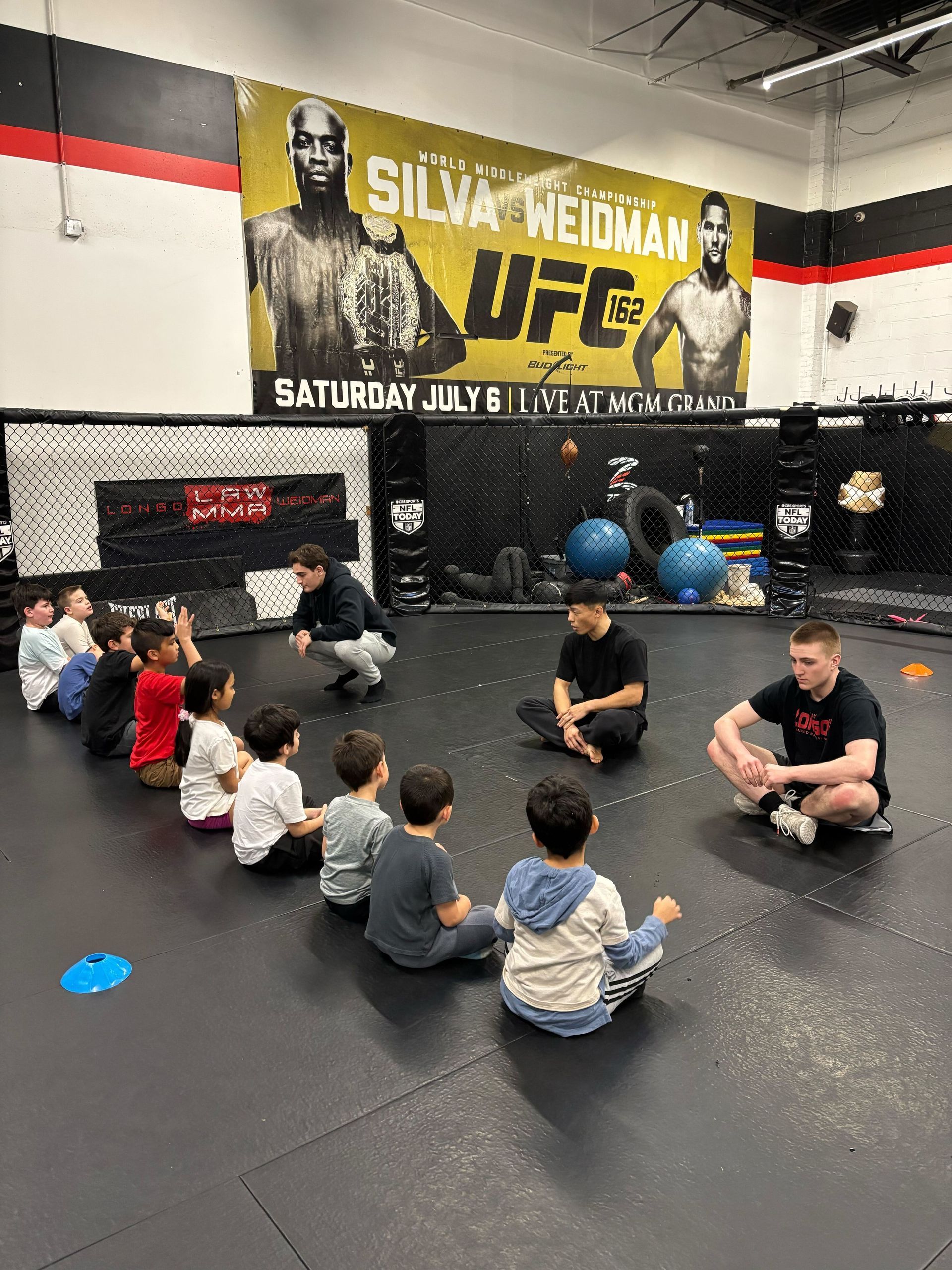
In youth classes, discipline shows up in simple ways that add up fast. Standing in line, taking turns, keeping hands to yourself unless you’re drilling with a partner, and following instructions even when you’d rather mess around. That sounds small, but it’s the same skill set kids need for school: listening, patience, and respectful behavior.
We also like that martial arts training gives kids earned confidence. Not hype, not empty praise, but confidence that comes from learning a skill, practicing it, and improving. When kids feel capable, they tend to act less impulsively. They’re not looking for attention in the same way because they’re getting recognition for real effort.
Habits we aim to build for youth students
• Consistent attendance: showing up even when you feel a little tired or distracted
• Coachability: listening, trying the correction, and not taking feedback personally
• Emotional control: breathing through frustration and resetting after a mistake
• Respect and teamwork: keeping partners safe and understanding that everyone is learning
• Goal setting: tracking progress in skills, conditioning, and behavior over time
Those habits usually spill over into home routines too, and parents notice it in little comments like, “Homework is smoother,” or “Mornings are less of a fight.” We never promise miracles, but we do promise structure, and structure tends to help.
Discipline for adults: structure, stress relief, and showing up for yourself
Adults come in with different pressures. Work stress, commuting, family schedules, and the mental noise that follows you around even when your phone is off. Mixed Martial Arts gives you a break from that because you have to be present. If you’re thinking about emails while someone is drilling with you, you’ll miss the timing. Training pulls you into the moment.
A lot of adults also want fitness, but they’re bored with fitness that feels like punishment. MMA training is demanding, but it’s not random. You’re learning skills while you get in shape, and that makes the effort feel worth it. You leave class tired, sure, but it’s a clean kind of tired. The kind that makes you feel like you did something real.
Discipline for adults is often about protecting time. Putting training on your calendar and treating it like an appointment you keep. Once you do that for a few weeks, you start building identity based habits: “I’m someone who trains.” That’s powerful, because identity is harder to break than motivation.
Safety, progression, and why “hardcore” is not the goal
Safety is a fair concern, especially with the stereotypes people have about MMA. The reality is that well coached training is structured, progressive, and focused on technique. Sports medicine reviews suggest that MMA injuries in training environments can be comparable to other contact sports when supervision and safety rules are followed, and many injuries involve lower extremities rather than catastrophic outcomes. That doesn’t mean injuries never happen, but it does mean good coaching and smart pacing matter.
We manage risk through progression. Beginners focus on fundamentals, positioning, and controlled drilling. Hard sparring is not a badge of honor, and it’s not how most people should train, especially at the start. Discipline includes knowing when to push and when to pull back. If you can’t train next week because you went too hard today, that’s not progress.
We also emphasize communication. You learn to tell your partner if something hurts, to tap early in grappling, and to keep strikes controlled in drilling. That’s part of becoming a good training partner, and good training partners last a long time in this sport.
What you can expect in your first 90 days
Starting something new can feel awkward, and we plan for that. Most people don’t walk in feeling confident. They walk in curious, maybe a little nervous, and that’s normal. The first 90 days are about building a foundation you can trust.
Here’s a realistic look at what changes during that first stretch if you train consistently:
1. Weeks 1 to 2: you learn the basic stance, movement, and safety rules, and you start understanding how class flows
2. Weeks 3 to 6: your conditioning improves, techniques feel less foreign, and you begin connecting skills into combinations or sequences
3. Weeks 7 to 12: you move with more control, your cardio feels steadier, and you start noticing discipline outside the gym, like better sleep and more routine
For most adults and teens, 2 to 3 sessions per week is a strong target if you want steady progress without burning out. More can be great, but consistency beats occasional intensity every time.
How Mixed Martial Arts builds discipline that lasts beyond the gym
The biggest reason Mixed Martial Arts creates lifelong habits is that it trains the process, not just the outcome. You learn to work through discomfort without panicking. You learn to accept feedback without ego. You learn to practice the same movement a hundred times and still care about doing it right.
That’s discipline in the real world too. It’s the skill of staying engaged when results are slow. It’s showing up when you’re busy. It’s keeping your standards even when nobody is watching.
And there’s something else that’s easy to miss: community. Training alongside other people who are also trying to improve makes discipline feel normal. When your teammates are working, you work. When you see someone start as a beginner and get better through consistency, it quietly convinces you that you can do the same.
FAQ: common questions we hear in Garden City
Is Mixed Martial Arts safe for beginners?
Yes, when training is coached with clear rules and progression. We start beginners with fundamentals, controlled drills, and pacing that matches experience.
Will MMA make my child more aggressive?
Our goal is the opposite: control, respect, and focus. Training gives kids a place to practice self control, and we hold students to behavior standards on the mat.
How often should I train to build discipline?
Most people do best with 2 to 3 classes per week. That frequency is enough to build momentum and routine without feeling overwhelming.
Do I need to be in shape before I start?
No. Training is how you get in shape. We adjust intensity and help you build fitness gradually.
Is this only for people who want to compete?
Not at all. Many students train for fitness, confidence, stress relief, and lifelong skill building, and never compete.
Take the Next Step
Building discipline is rarely about one big decision. It’s usually a string of smaller choices that you repeat until they become automatic, and training gives you a practical way to rehearse those choices week after week. If you’re looking for a structured path that supports fitness, confidence, and better daily habits, our approach is designed to meet you where you are and keep you progressing.
When you’re ready to experience that structure in person, we’ll guide you through a start that feels clear and manageable. At Ray Longo's Mixed Martial Arts, we keep the focus on fundamentals, safety, and consistent improvement so your training supports your life, not the other way around.
Take what you learned here and join a free Brazilian Jiu-Jitsu class at Ray Longo’s Mixed Martial Arts.