

Martial Arts for Stress Relief: Proven Techniques to Calm Your Mind
Your nervous system can learn calm under pressure, and training is one of the most practical ways to teach it.
Stress has a way of sitting in the body - tight shoulders in traffic, a clenched jaw during meetings, that wired feeling at night when you want to sleep but your brain keeps sprinting. We built our training to meet that reality, because most adults who walk into our facility are not looking to become cage fighters. You want to feel better in your own skin, think more clearly, and leave the day behind for an hour.
That is where martial arts shines. Recent research keeps reinforcing what we see on the mats every week: structured combat training can reduce perceived stress, improve mood, and build resilience through a mix of physical exertion, focused attention, and social connection. It is not “just exercise,” and it is not “just fighting.” It is a repeatable practice for calming the mind while the body works.
If you are searching for martial arts classes in Garden City that actually help you decompress and reset, we want you to understand what makes training work as stress relief, what it looks like in a real class, and how to start at a level that fits your schedule and energy.
Why martial arts works for stress relief (and why it feels different than the gym)
Most people know exercise helps stress. The part that surprises adults is how consistently martial arts training can shift your mental state, even when you arrive feeling tense and distracted. Studies on combat martial arts and mental health describe stress relief and positive emotion as key pathways between training and improved well being. In plain terms: when your body moves with purpose and your mind stays engaged, your mood improves and stress drops.
There are three big reasons this feels different from a typical workout.
First, the attention demand is higher. When you are learning a combination, drilling a takedown entry, or practicing a guard pass, your brain cannot keep replaying your inbox. Technique pulls you into the present moment.
Second, the intensity comes in rounds. That structure matters. Short bursts of effort followed by brief recovery teach you how to downshift your breathing and heart rate on cue, which is a real world skill when your day spikes your stress.
Third, you are learning a skill, not just burning calories. Skill progress creates a steady sense of competence, and that “I can handle this” feeling carries into work and home more than most people expect.
The science in simple terms: what changes in your body and brain
We do not need to turn class into a biology lecture, but it helps to know what is happening under the hood. Research and reviews on martial arts and mental health point to both physiological and psychological effects.
Physiological: stress hormones, breathing, and recovery
When you train, you put your body under controlled stress. Over time, that controlled exposure can improve your recovery response. The goal is not to stay hyped up all day. The goal is to learn how to return to baseline faster.
In practical terms, you will notice:
- Your breathing becomes more organized during effort, not just after it
- You feel less “stuck” in fight or flight once class ends
- Your sleep improves because you have actually discharged energy instead of carrying it
Controlled breathing, especially between rounds, is one of the quiet drivers here. Many reviews connect breath control and mindful focus in martial arts to relaxation responses and lower stress markers.
Psychological: emotional regulation and present moment focus
A big theme in recent literature is emotional regulation. When you practice under pressure in a safe environment, you learn to notice stress without panicking. You get reps at staying composed, resetting quickly after mistakes, and continuing anyway.
That matters for adults. Work stress is often not about one crisis, but about constant small spikes. Training gives you a place to practice staying steady through those spikes and then letting them go.
Martial arts as “active mindfulness” (without the awkwardness)
Some people love sitting meditation. Some people do not. Martial arts can function like mindfulness training that happens while you move. Your focus is anchored to very concrete cues: stance, distance, timing, posture, breathing, and the feel of the floor under your feet.
That is why many adults describe leaving class with a clear mind even if the class was physically demanding. Your attention has been trained onto something specific and immediate for an extended period, and that interrupts the mental loop of stress.
We also keep classes structured so you are not wandering around wondering what to do next. That structure is part of the stress relief. Decision fatigue is real, and it is nice when your hour is handled for you.
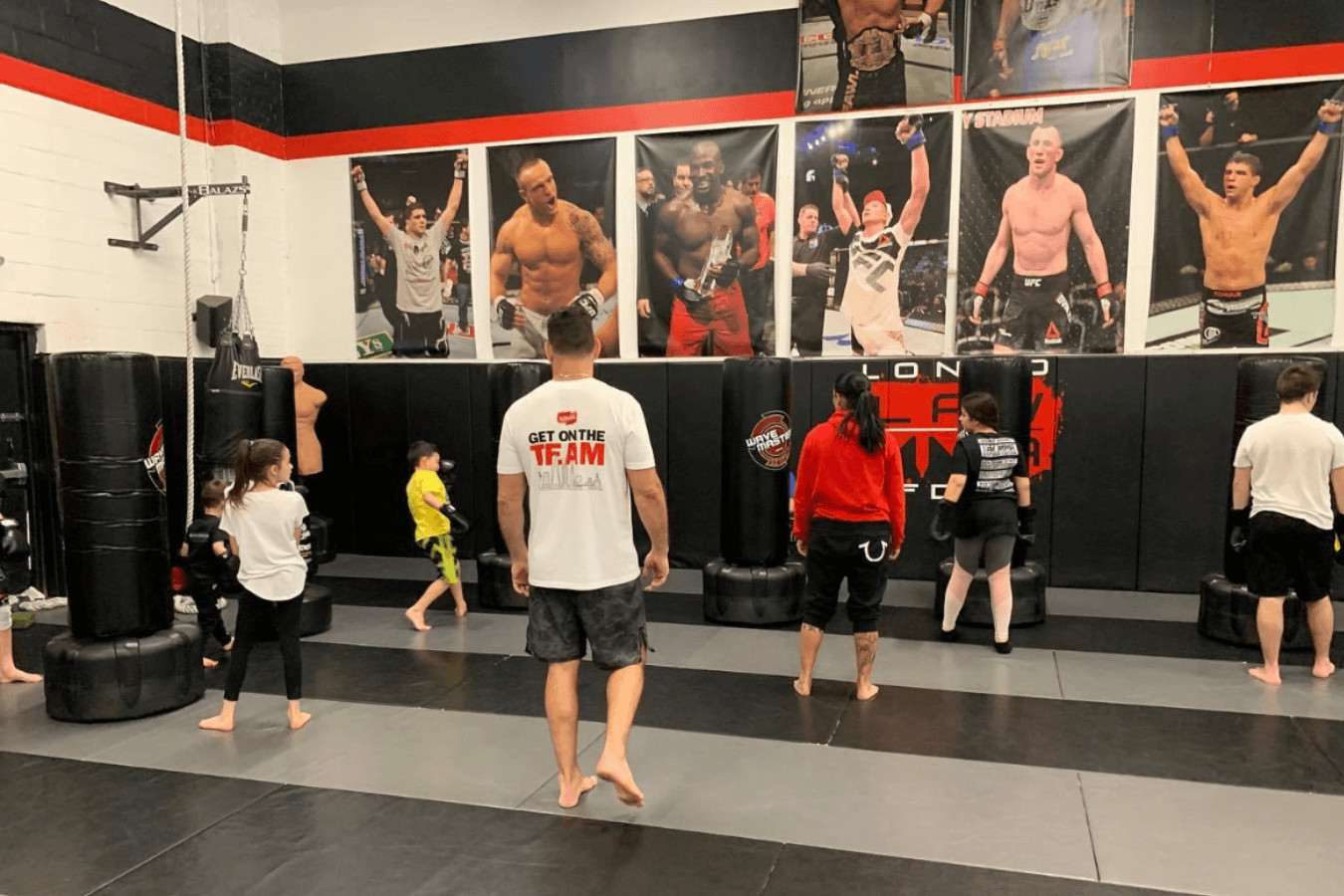
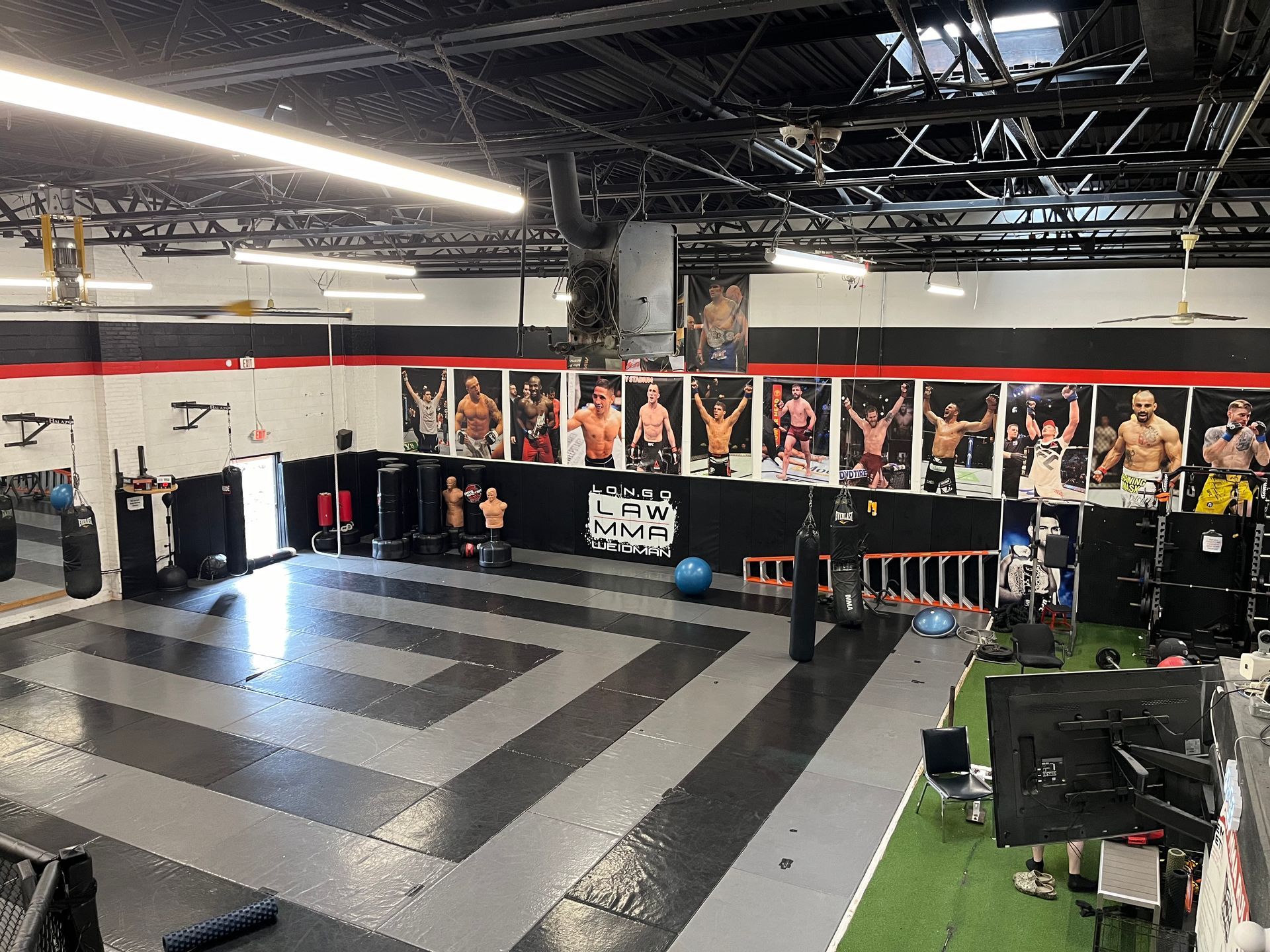
What a stress relieving class looks like in our facility
Adults sometimes worry that “MMA” automatically means getting hit hard or going full speed with experienced people. Our approach is more practical and progressive than that. We match intensity and contact to your experience, goals, and comfort level.
A typical class that supports stress relief usually includes:
• Warm up and mobility to loosen up the workday tension and get your joints moving
• Technical instruction where you learn a small set of skills and repeat them with coaching
• Partner drills or pad work where you raise your heart rate in a controlled way
• Conditioning in short rounds that teach you how to work hard and recover cleanly
• Cool down with stretching and breathing to bring your system back down
This is where adults often notice the shift. You can come in carrying the day, but the combination of movement, focus, and coached pacing tends to leave you calmer than when you arrived.
Techniques we rely on to calm the mind, round after round
Stress relief is not one magical trick. It is a stack of small habits repeated consistently. Here are a few we coach every day because they translate directly to real life.
Breathing resets between rounds
We cue steady nasal or controlled breathing whenever it fits the drill. Between rounds, we want you to lower your shoulders, relax your jaw, and take slow breaths that expand your belly and ribcage. It sounds basic, but it is powerful because it teaches your nervous system a reliable off switch.
Distance and timing as “attention training”
When you learn to judge distance, your brain becomes quieter. You cannot be half present and do it well. That single task focus is one of the reasons martial arts can reduce anxiety and stress in research findings. You are training attention in a way that feels practical, not abstract.
Drilling for rhythm, not chaos
Beginners sometimes think training is supposed to be chaotic. We prefer rhythm. Repetition builds confidence, and confidence reduces stress. Once you have rhythm, we add complexity at the right time, not all at once.
Safe challenge to build resilience
Research on martial arts and self defense also connects training to higher resilience, including reframing stress as a challenge instead of a threat. We do that by giving you hard but achievable tasks. You struggle a little, you improve, you notice you are capable, and the next stressful situation outside the gym feels more manageable.
How often should you train for stress relief?
Consistency beats intensity. For most adults, 2 to 3 sessions per week is a sweet spot for noticeable changes in mood, stress levels, and sleep. More can be great if you recover well, but you do not need to live in the gym for this to work.
If your schedule is tight, even two sessions a week can create a reliable reset point. A lot of our adult students treat class like a standing appointment with their future self.
Getting started with adult MMA in Garden City without feeling overwhelmed
If you are curious about adult MMA in Garden City but you have not trained before, the key is starting with a clear on ramp. We do not throw you into the deep end. We coach fundamentals and build from there.
Here is a simple progression that works well for stress relief and skill building:
1. Start with fundamentals focused sessions where you learn stance, movement, and basic technique at a controlled pace
2. Add pad work and drilling to raise intensity in short, manageable rounds
3. Build conditioning gradually so you leave energized, not crushed
4. Introduce optional controlled sparring only when you are ready and interested
5. Keep your schedule steady so your body and mind adapt week to week
This approach keeps training challenging but not intimidating, which is important if your goal is feeling calmer in daily life.
Common questions we hear from Garden City adults
Can martial arts really help with stress, or is it just for fighters?
It helps regular adults, especially when training is structured and consistent. Research shows improvements in well being, stress relief, and emotional regulation even for non competitive practitioners. You can train for health, confidence, and mental clarity without ever wanting to compete.
I work long hours. Is MMA too intense if I am already exhausted?
Counterintuitively, smart training often improves fatigue because it helps regulate stress and sleep. We scale intensity so you can train productively without digging a recovery hole. Most adults leave class physically tired but mentally lighter, and that is the point.
Am I too old or out of shape to start?
No. We have adults start at many different fitness levels. Our job is to adjust the pace, contact, and volume so you can improve safely. Over time you build strength, balance, and conditioning, and you also build the confidence that comes from sticking with something.
Will MMA make me more aggressive?
Well coached training tends to do the opposite. Good martial arts training emphasizes self control, respect, and emotional regulation. Learning to stay calm under pressure is part of the practice.
How is this different from going to the gym?
You get fitness, but you also get skill learning, present moment focus, and community. That combination is one reason martial arts shows strong mental health benefits in current research. You are not just “working out,” you are training a mindset.
Take the Next Step
If you want stress relief that is practical and repeatable, martial arts gives you a training plan for your nervous system as much as your body. You will work hard, learn real skills, and walk out with a quieter mind that tends to carry into the rest of your week.
When you are ready to experience that approach in person, we would love to help you get started at Ray Longo's Mixed Martial Arts. Our adult programs are built so you can train safely, progress steadily, and use each class as a real reset, right here in Garden City, NY.
Continue your training journey beyond this article by joining a free Brazilian Jiu-Jitsu class at Ray Longo’s Mixed Martial Arts.